


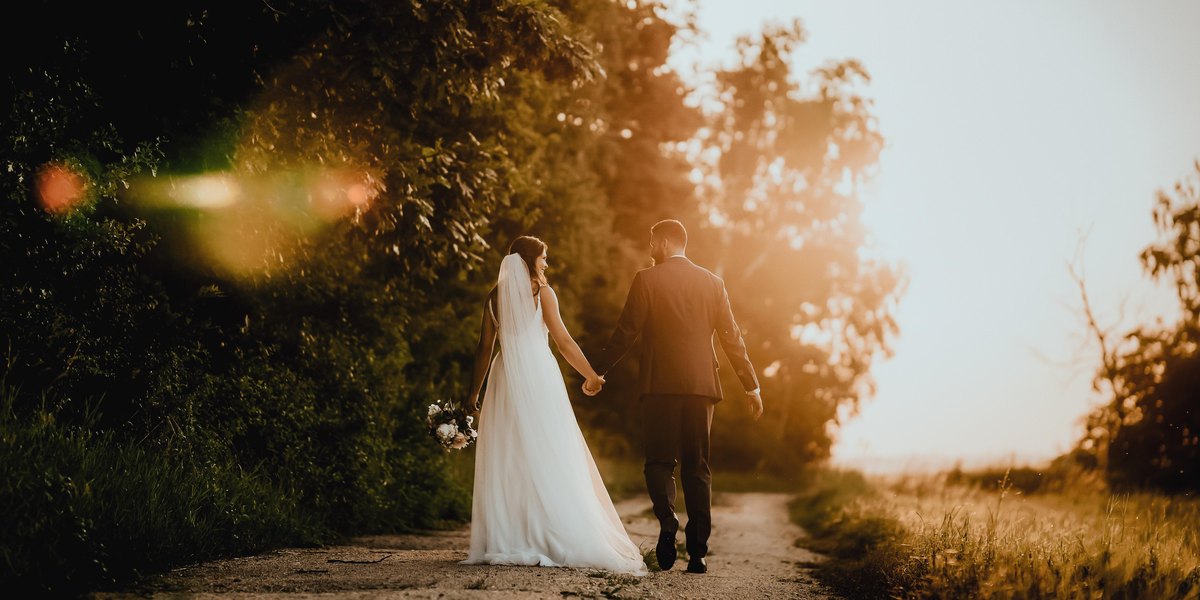
Most wedding venues send everyone home at midnight. A working farm usually doesn’t, because your guests are already sleeping upstairs. That single fact changes the shape of the day more than any decoration.
It matters even more when people are flying in. If half the guest list is coming from another country, a venue with rooms turns one evening into a long weekend, and turns the logistics from a spreadsheet into a short walk across a courtyard. In the properties we list, 128 out of 217 have at least twenty beds, and thirty-nine have more than forty.
What an agriturismo actually is
The word gets translated as “farmhouse”, which undersells it. An agriturismo is a working farm that is legally allowed to host guests and serve meals, on the condition that the farming comes first. That legal detail explains most of what you will notice on the day.
The kitchen is the farm’s own, so there is no outside caterer to hire and coordinate. The setting is the farm itself: a threshing yard, a pergola, a row of vines. And because it is a business built around hospitality, the rooms are real rooms, not an afterthought.
It also explains the limits. Farms are not banqueting halls. Some seat two hundred, many top out around eighty, and the covered space is often smaller than the garden. Ask for the seated indoor capacity, not the total. In October that difference is the whole plan.
The paperwork, if you are not Italian
This is where a lot of blogs get vague, so here is the specific version. Two separate things have to be true.
The venue has to be licensed for it. Under article 106 of the Italian Civil Code a civil marriage is celebrated in the town hall. Municipalities can designate other buildings as a separate civil status office under article 3 of Presidential Decree 396/2000, through a council resolution sent to the Prefect. Where that resolution exists and names the farm, you can legally marry there. Where it does not, you cannot, no matter how willing the owner is.
You have to be free to marry. Article 116 of the Civil Code requires a foreign national to give the registrar a nulla osta, a certificate of no impediment issued by the authorities of your own country, confirming nothing in your home law prevents the marriage. It must be recent, generally issued within six months of the appointment, and the names and dates on it have to match your passport exactly. A mismatched middle name is a real reason weddings get delayed.
Many couples solve both problems by marrying legally at home or at the town hall first, then holding a symbolic ceremony at the farm. A symbolic ceremony can be held anywhere, by anyone you choose, and needs no permission. It is the honest, boring answer, and it is what most destination weddings in Italy actually do.
Whatever you decide, check with the comune where the farm is, not only with the farm. The owner knows their property. The registrar knows the paperwork.
How many guests, and when to go
Capacity is the number that decides everything and the one least often written down. Where an owner has declared it, you will find it on the listing next to the name; the largest properties that have published a figure seat a hundred and fifty.
On season: from May to September almost everything happens outdoors, and Saturdays in June and September are the first dates to disappear. If you can move to a Friday or a weekday, you will find far more availability and often better terms. If you are bringing guests from abroad, a Thursday or Friday wedding also gives them a reason to stay for the weekend, which is usually what they wanted anyway.
Where these farms are
We publish a regional page only where there are enough properties to actually choose from. That is ten regions and 217 farms.
- Tuscany: 47 properties, 33 with at least twenty beds. The most obvious choice, and the one with the most competition for dates
- Umbria: 20 properties. The same hills as Tuscany, shorter drives, smaller farms
- Puglia: 17 properties, among masserie and old olive groves
- Lombardy: 16 properties, close enough to Milan that guests can travel in and out in a day
- Sicily: 14 properties, with a long season from April to October
- Sardinia: 14 properties, usually inland but a short drive from the coast
- Emilia-Romagna: 13 properties, in the region where the food does most of the deciding
- Lazio: 13 properties, mostly in the countryside north of Rome
- Campania: 13 properties, between the inland hills and the coast
- Marche: 12 properties, family-run country houses
The new section
Farm wedding venues in Italy is now its own part of Agriturismi.it. Each listing carries what you need to build a shortlist: capacity where the owner has declared it, number of beds, outdoor space, and whether the property can be booked exclusively for the day.
You write to the owner directly. There is no agency in between and no commission on your wedding. The pages exist in eight languages, which matters when half the family is reading in one language and the venue answers in another.
It is a young section and it shows. Some listings are still missing capacity figures and reception photographs, and we are asking the owners for them. If you run a farm that hosts weddings, the fields are in your control panel.
Frequently asked questions
Is a farm cheaper than a villa for a wedding in Italy?
Usually yes, for the same number of guests, because the kitchen is in-house and there is no separate catering contract. But price is not the only difference. A villa rents you a setting; a working farm also rents you beds for your guests and food it grew itself.
Can we book the whole property for ourselves?
Many farms offer exclusive use for the day, meaning one event at a time and no other guests staying. It is not automatic and not every property does it, so ask early and put it in writing with the date.
Can our guests sleep at the venue?
In most cases yes, and it is the main reason couples choose this format. Of the properties in our listings, 128 out of 217 have at least twenty beds. The number is shown on each listing.
Can we legally marry at the farm, or only have a blessing?
Legally only if the municipality has designated that venue as a separate civil status office under article 3 of Presidential Decree 396/2000. Otherwise you marry at the town hall and hold a symbolic ceremony at the farm, which is what most couples do. Ask the comune, not just the venue.
What documents do we need as foreign nationals?
Article 116 of the Italian Civil Code requires a nulla osta, a certificate of no impediment from your own country’s authorities, usually issued within six months and submitted to the comune where you marry. Requirements vary by nationality, so check with your embassy or consulate in Italy early: this is the step that sets your timeline.
How far ahead should we book?
Saturdays in June and September go first, often more than a year out. Weekdays open up far more choice. If you are bringing guests from abroad, a Friday wedding tends to work better anyway, because nobody has to fly home on Sunday morning.