
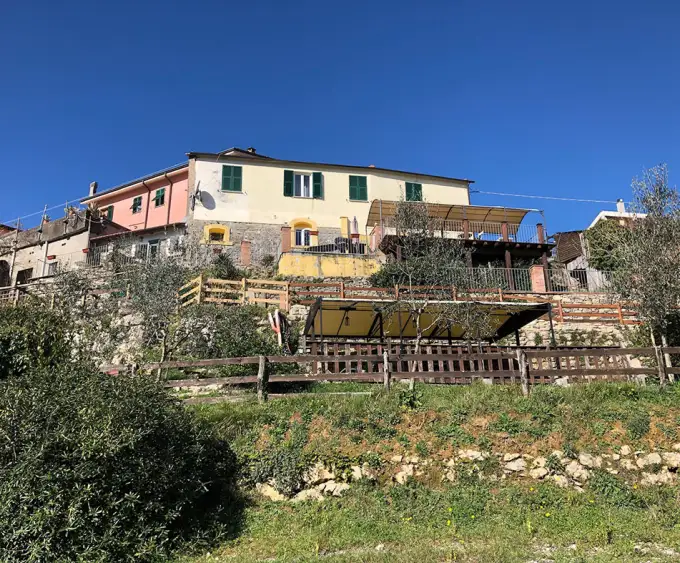
Agriturismo in Liguria with Educational Farm, Riding
Farm stays in Liguria occupy one of the steepest agricultural landscapes in Europe. The region is a narrow arc of coast backed immediately by mountains, and its farms sit on dry-stone terraces cut into slopes that fall to the sea — olives, vines, basil and lemons on ledges a few metres wide.
The two rivieras
East of Genoa, the Riviera di Levante holds the Cinque Terre, Portofino and the Gulf of Poets. Farms above the coast here look down on the villages and are reached by hairpin roads or, in places, on foot. West of Genoa, the Riviera di Ponente around Imperia and Albenga is sunnier, drier and more agricultural, with the region's main olive belt and its flower nurseries. Inland, the Valle Arroscia and the hills behind Genoa are cooler and much less visited.
What the farms produce
Taggiasca olives and the mild oil pressed from them
Genoese basil for pesto, grown under low glass on the coast
Vermentino, Pigato and the Cinque Terre whites, including the sweet Sciacchetrà
Lemons, chestnuts and the herbs used in Ligurian vegetable pies
Walking access to the coastal paths, including stretches of the Cinque Terre trails
Timing and access
May, June and September are ideal: warm, in flower and without August's coastal crowds. The olive harvest runs from October to December. Winters are mild by Italian standards, and the western Riviera stays workable year round.
Genoa has an airport; Nice is close to the western end and Pisa to the eastern. The coastal railway is excellent and reaches almost every village, which matters because the roads up to the farms are narrow, steep and slow. Check parking with the host before booking — on this coast it is rarely a given.
The best educational-farm agritourism stays: animals, garden, workshops and nature for children and families, with locally sourced produce and guided activities.
How many agriturismi are there in Liguria, and where are they concentrated?
Liguria has 127 active agriturismo structures. The province with the most options is Imperia (40 structures), followed by La Spezia (36), Savona (31), and Genoa (20). The distribution reflects the agricultural character of the hillside and coastal areas, with a significant presence in the Apennine hinterland and along the coastal strip.
Which areas of Liguria are best for an agriturismo stay?
The Cinque Terre draw high demand, with structures set among terraced vineyards overlooking the sea. The Riviera dei Fiori, in the hinterland of Imperia, offers olive groves and rolling hill landscapes. The Tigullio and Golfo Paradiso areas are key reference points in the Genovese. The Costa Ligure and seaside Liguria remain the most searched terms among travelers looking to combine countryside and coast.
What do you eat at a Ligurian agriturismo?
Agriturismo cuisine in Liguria is built around DOP pesto genovese, focaccia, farinata, trofie, and trenette. Local products include DOP Riviera Ligure extra-virgin olive oil, taggiasca olives, salt-cured anchovies from Monterosso, and DOC wines from the Cinque Terre and Riviera Ligure di Ponente appellations. Structures in the hinterland frequently feature mushrooms, aromatic herbs, and conigli alla ligure.
When is the best time to visit an agriturismo in Liguria?
The optimal period runs from April to June and from September to October. In spring, the olive groves are in full bloom; in autumn, the olive harvest and grape harvest take place. July and August are the busiest months, especially in the Cinque Terre and along the Costa Ligure. Winter is suited to quiet stays in the inland areas.
What services do Ligurian agriturismi offer?
The most common services include on-site restaurant dining, olive oil and wine tastings at the farm, pet-friendly accommodation, and fattorie didattiche for families. Some structures have a swimming pool, particularly in the provinces of La Spezia and Imperia. On Agriturismi.it you can filter structures by specific service, selecting only those that match your needs.
What can you do during an agriturismo stay in Liguria?
The most popular activities include hiking the trails of the Alta Via dei Monti Liguri, extra-virgin olive oil and local wine tastings, Ligurian cooking lessons, and boat trips along the Costa Ligure. In the Cinque Terre, visitors walk the paths through the terraced vineyards. In the hinterland of the Tigullio and Golfo Paradiso, horseback riding and aromatic herb foraging are regularly organized.