


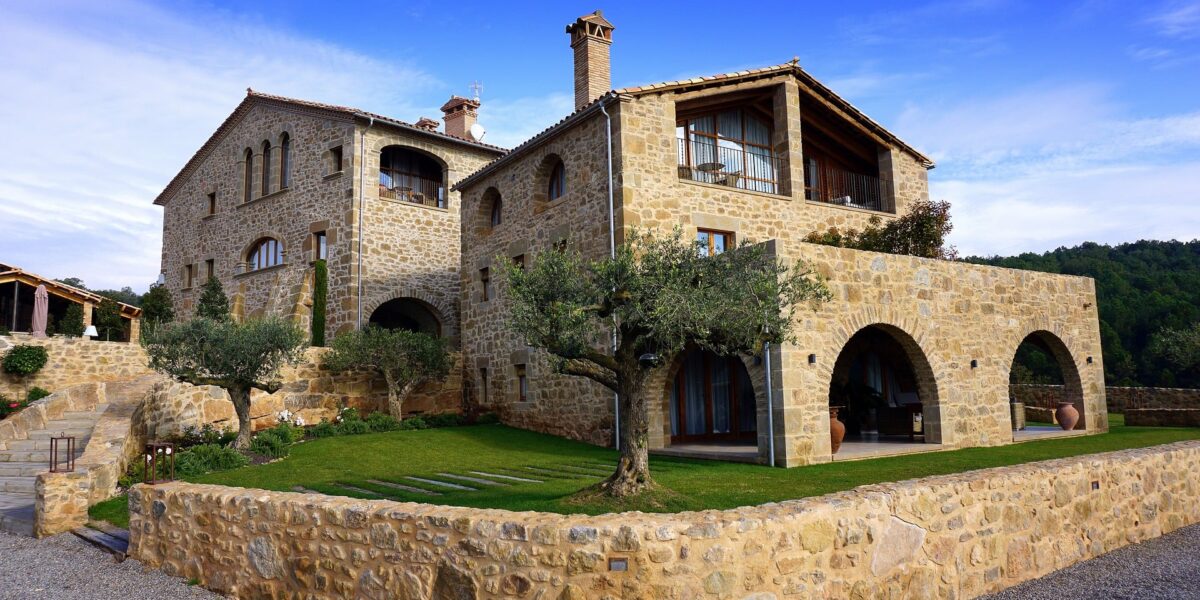
Every year thousands of people from the United States, the UK, Germany and the Netherlands search for the same thing: a stone farmhouse in the Italian countryside, a few hectares of olive trees, and guests at the table. It is a realistic plan — but an agriturismo is not a bed & breakfast with a nice view. Under Italian law it is a working farm that is also allowed to host guests, and that single distinction shapes every permit, tax and cost that follows.
This guide explains what actually happens between “we found the house” and “we welcomed our first guest”, written for people who are not Italian and are starting from outside the system. Updated for 2026.
The short answer, in seven points
- An agriturismo is regulated by national framework Law 96/2006, but the operative rules are set by each of the 20 Regions. Tuscany and Umbria are not the same as Puglia or Trentino.
- You must be a registered agricultural entrepreneur (imprenditore agricolo) first. Hospitality is a secondary activity, never the main one.
- Farming must remain prevalent over hospitality. This is the rule that gets applications rejected.
- EU citizens can do this freely. Non-EU citizens need a residence permit that allows self-employment — an elective residency visa does not.
- Since 2025 every accommodation in Italy must display a CIN (national identification code) obtained through the BDSR database.
- Realistic budget from purchase to first guest, excluding the property: €150,000–€450,000.
- Expect 12 to 24 months between buying and opening. Renovation permits, not paperwork, are usually the bottleneck.
What is an agriturismo, exactly?
An agriturismo is hospitality offered by a farmer through their farm: rooms or apartments, meals made largely from what the farm produces, sometimes camping pitches, tastings, courses or activities. Law 96/2006 calls it an activity “connected” to agriculture — legally it is part of the farm business, not a separate hotel business.
The practical consequences are large and they are the reason people choose this route:
- You can convert existing rural buildings for guest use where a commercial hotel would never be authorised.
- Income is taxed under a favourable regime (see below), not as ordinary hotel income.
- You have access to rural development funds (PSR/CSR regional calls, often 40–60% of eligible renovation costs) which are closed to B&Bs.
And the cost: you have to genuinely farm. Olive groves, vines, orchards, vegetables, honey, sheep, hens — something real, cultivated by you, every year.
Can a foreigner open an agriturismo in Italy?
Yes. There is no nationality requirement to own Italian farmland or to register a farm business. What differs is your right to live and work in Italy.
If you hold an EU, EEA or Swiss passport
You can move, buy and start the business with no visa. Register your residence at the local Comune after three months, get a codice fiscale (tax code) — which you will need before you can even sign the purchase deed — and proceed like any Italian applicant.
If you are a non-EU citizen
This is where most dreams quietly stall, so be clear about it before you make an offer on a property. Owning is easy; working is not. The realistic routes are:
- Italian citizenship by descent (jure sanguinis). By far the most common route for applicants from the US, Argentina and Brazil. If it applies to you, it solves everything.
- Self-employment visa (visto per lavoro autonomo). Legitimate but capped: it depends on the annual decreto flussi quota, which is small and consumed within hours of opening. Start early and use an immigration lawyer.
- Investor visa (visto per investitori). No quota, but it requires a qualifying investment — from €250,000 in an innovative startup or €500,000 in an Italian limited company. Some buyers structure the farm as an società agricola to fit.
- Family reunification with an EU-citizen spouse or partner.
One warning worth repeating: the elective residency visa (ERV), often marketed to retirees buying in Tuscany, explicitly forbids any work activity. You cannot run an agriturismo on it. Non-EU applicants are also subject to the condizione di reciprocità — Italy checks whether your country grants Italians the same right to set up a business.
The rule that decides everything: agricultural prevalence
Italian authorities will not let you run a hotel and keep six olive trees as an alibi. The farm must stay prevalent over hospitality, measured in working time: the hours you spend farming must exceed the hours spent on guests, calculated with regional coefficients that assign a standard number of hours per hectare of each crop and per bed offered.
In practice your Region issues a certificate of connection (certificato di connessione) or approves an equivalent business plan, and it caps what you may offer accordingly. Typical regional ceilings: 10 to 30 beds, and meals served only to a limited number of covers, often only to overnight guests. Two consequences worth planning around:
- More land unlocks more beds. If you want twelve rooms, the size and type of your cultivation has to justify them. Buy land accordingly — this is a decision made before the purchase, not after.
- Food must come mainly from the farm. Most Regions require that a defined share of ingredients (commonly the majority) is grown by you or sourced within the same Region.
Several Regions also require prior agricultural experience or attendance of a professional course before granting authorisation. Check this first: it can add a year to your timeline.
Buying the property: five checks before you sign
- Right of first refusal. Neighbouring farmers and any tenant farmer hold a legal pre-emption right (prelazione agraria) over agricultural land. A sale that ignores it can be undone for two years. Your notary must handle the formal offer.
- Cadastral category and planning status. Rural buildings (categoria A/6, D/10) and abusive extensions are common. Check that every square metre is legally registered and that the Comune will authorise change of use for guest rooms.
- Landscape and heritage constraints. Vincolo paesaggistico or idrogeologico can forbid a pool, restrict window openings or add a year of review by the Soprintendenza.
- Water, access and utilities. A private well needs authorisation; a shared access road needs a registered right of way; three-phase power for a professional kitchen is not always available.
- The land itself. Get an agronomist to confirm the soil, water and hectares actually support the farming plan you intend to declare.
Budget for a geometra or architect and an independent surveyor before the preliminary contract (compromesso), not after. In Italy the preliminary contract already binds you.
From purchase to first guest: the eight steps
- Get a codice fiscale and, if non-EU, resolve your immigration route.
- Buy the property before a notary, respecting the pre-emption procedure.
- Open the farm business: VAT number with an agricultural activity code, registration in the special agricultural section of the Registro delle Imprese, INPS agricultural contributions, and a farm file (fascicolo aziendale) with the regional agency.
- Start farming and file the annual crop declaration. Some Regions want at least one full agricultural year on record before authorising hospitality.
- Obtain the certificate of connection from the Region, with your business plan and hours calculation.
- Renovate with the required building permits, meeting hygiene, fire-safety and accessibility standards for the rooms and, if applicable, the kitchen.
- File the SCIA with the Comune‘s one-stop business desk (SUAP), declaring beds, covers and activities, plus the food-safety notification (HACCP) if you serve meals.
- Register in the BDSR and obtain your CIN, then set up guest registration with the police portal (Alloggiati Web), the tourist-tax account and ISTAT reporting.
Since 1 January 2025 the CIN must appear on your listings and outside the building, and every accommodation must be equipped with fire extinguishers and gas and carbon-monoxide detectors. Operating without it carries fines from €800 to €8,000.
What it really costs
Property prices vary enormously — a ruin in inland Sicily and a restored farmhouse in Chianti are two different planets. What follows is everything except the purchase price, which is where most first-time budgets go wrong.
| Item | Realistic range |
|---|---|
| Structural renovation and systems | €800 – €1,600 per m² |
| Guest room, fully fitted (per room) | €6,000 – €12,000 |
| Professional kitchen and dining room | €25,000 – €60,000 |
| Swimming pool (with permits) | €35,000 – €80,000 |
| Agricultural set-up: planting, machinery, irrigation | €15,000 – €60,000 |
| Technical fees, permits, notary, consultants | €15,000 – €40,000 |
| Branding, photography, website, listings | €3,000 – €10,000 |
| Working capital for the first 12 months | €20,000 – €40,000 |
| Total, excluding the property | €150,000 – €450,000 |
Before committing, look at what comparable farm stays charge in the area you are considering: our guide to how much a farm stay costs in Italy gives current average rates by region and season, which is the fastest sanity check on your revenue assumptions.
On the income side, do not build a plan on twelve months of occupancy. Outside the lakes and the Dolomites, most agriturismi earn the bulk of their revenue between May and September, and the difference between a good year and a bad one is usually made in April, June and October.
How agriturismo income is taxed
This is one of the genuine advantages of the agriturismo status. Under the special regime of Law 413/1991, hospitality revenue is taxed on a flat-rate basis: only 25% of gross receipts is treated as taxable income, and 50% of VAT charged is paid, the rest being deemed deductible. Farming income itself is normally taxed on cadastral values (reddito agrario) rather than on actual profit.
Rates, thresholds and options change; treat this as orientation and appoint an Italian commercialista who has agriturismo clients specifically. It is the single most useful hire you will make.
Five mistakes foreign buyers make
- Choosing the house before the Region. Bed caps, land requirements and experience prerequisites differ enormously. Pick the regulatory environment, then house-hunt inside it.
- Underestimating the farming. Cultivating four hectares of olives is not a hobby you fit around check-ins. Many successful owners hire a local farmer or use a contoterzista contractor from the start.
- Buying land that cannot justify the beds. Twelve rooms on two hectares of unproductive scrub will not be authorised.
- Ignoring the language. SUAP, Soprintendenza, ASL and INPS operate in Italian only. Without functional Italian, budget for a consultant on every file.
- Assuming a visa follows the purchase. It does not. Property ownership in Italy grants no right of residence.
Where to start looking
The most useful research you can do costs nothing: stay in several agriturismi in the areas you are considering, in low season, and ask the owners what they would do differently. Browse by region on Agriturismi.it — Tuscany, Umbria, Piedmont, Puglia — or explore all Italian farm stays to see how established places present themselves, price their rooms and describe their farms.
And when your own agriturismo is authorised and open, you can list it on Agriturismi.it, the Italian farm-stay directory online since 1999.
Frequently asked questions
Can a foreigner buy farmland in Italy?
Yes. EU citizens have no restrictions. Non-EU citizens can buy provided their country grants the same right to Italians (condition of reciprocity), which is satisfied for the United States, the United Kingdom, Canada, Australia and most other countries. Buying property, however, does not give you the right to live or work in Italy.
How much land do I need to open an agriturismo?
There is no single national minimum. Each Region calculates the farming hours your crops and livestock generate and requires those to exceed the hours generated by your beds and meals. As a rough order of magnitude, two to five hectares of a labour-intensive crop such as olives, vines or vegetables typically supports a small operation of six to ten beds.
What is the difference between an agriturismo and a B&B in Italy?
A B&B is a hospitality business with no farming requirement, usually limited to a few rooms in the owner’s home. An agriturismo is a farm that hosts guests: it requires a registered agricultural business, the farming must remain prevalent, and in exchange it gets favourable taxation, access to rural development grants and the right to convert rural buildings.
How long does it take to open an agriturismo in Italy?
Realistically twelve to twenty-four months from purchase. Registering the farm business takes weeks; renovation permits, the regional certificate of connection and any heritage review take months, and some Regions require a completed agricultural year before authorising hospitality.
Do I need to speak Italian?
To run the business day to day with international guests, no. To complete the authorisation process, effectively yes — municipal, health, heritage and social-security offices work in Italian only. Most foreign owners work with an Italian accountant and a technical consultant throughout.
What is the CIN and do I need one?
The CIN (Codice Identificativo Nazionale) is the national identification code that every Italian accommodation, agriturismi included, must obtain through the national accommodation database (BDSR). It has been mandatory since 1 January 2025 and must be shown on all listings and advertisements and displayed outside the property.
This article is general information, not legal, tax or immigration advice. Agriturismo rules are set regionally and change: always confirm the current requirements with the Region where you intend to open, and with a qualified Italian professional. Italian readers can find our full national guide here: Come aprire un agriturismo in Italia.