


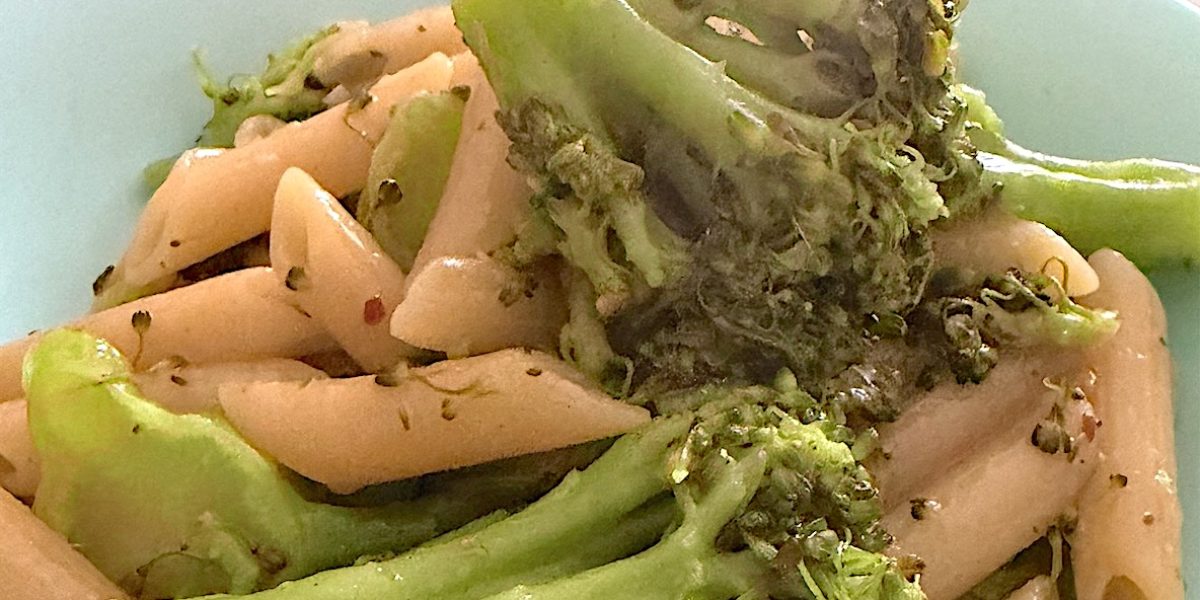
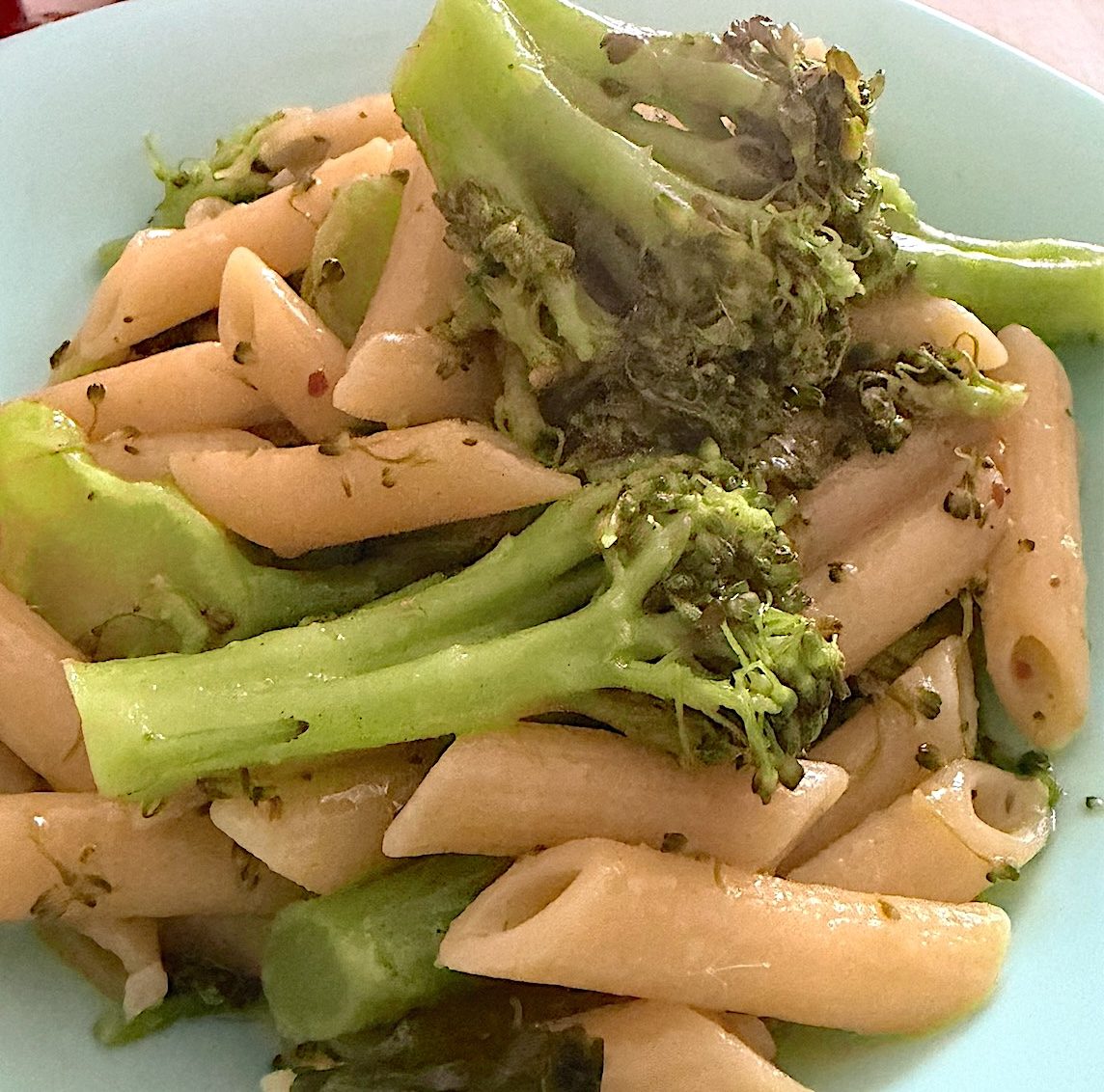
Pasta e broccoli is one of the simplest first courses in Italian home cooking. It takes a handful of ingredients, a single pot of water and half an hour. The step that makes the difference is the water itself: the broccoli is blanched first, then the pasta cooks in the same pot and picks up its flavor. Garlic, olive oil and chili do the rest in the pan. This is the version in the photo, with penne and florets sautéed until they brown a little at the edges. The stems go in too, peeled and cut into sticks. November is a good time to make it, because in Italy broccoli is a cold-season vegetable, available until spring.
Prep 10 minutes, cooking 20 minutes, serves 4.
Ingredients (serves 4)
- 320 g (11 oz) penne
- 1 large head of broccoli, about 600 g (1.3 lb)
- 2 garlic cloves
- dried chili flakes (crushed red pepper) to taste, or 1 fresh chili
- 5 tablespoons extra virgin olive oil, plus extra for drizzling
- coarse salt for the water
How to make pasta with broccoli
- Prepare the broccoli. Cut the florets off the stem and halve the larger ones, so they all cook at the same pace. Keep the stem: peel off the tough, fibrous outer layer with a vegetable peeler and cut the tender core into sticks. Rinse everything.
- Blanch the broccoli. Bring 4 liters (about 4 quarts) of water to a boil in a large pot and salt it. Cook the florets and stems for 4-5 minutes: they should stay green and still firm. Lift them out with a slotted spoon and keep the water on the heat.
- Make the base. In a wide pan, warm the olive oil over low heat with the garlic, crushed or sliced, and the chili. Two minutes is enough: the garlic should just turn golden, because burnt garlic tastes bitter.
- Sauté the broccoli. Add the broccoli and cook over medium heat for 5-6 minutes, stirring now and then. The florets brown at the edges and some break apart. That is fine: those small pieces will cling to the pasta. Season with salt.
- Cook the pasta. Meanwhile, cook the penne in the broccoli water. Drain it a couple of minutes before the time on the package and save a cup of the cooking water.
- Toss it together. Add the pasta to the pan with half a ladle of cooking water and toss over high heat for two minutes, until the liquid turns into a light sauce that binds pasta and broccoli. If it gets too dry, add another splash of water. Remove whole garlic cloves before serving.
- Serve. Plate it right away and finish with a drizzle of raw olive oil.
Why cook the pasta in the broccoli water
As it blanches, the broccoli releases some of its flavor into the water. When the pasta cooks in the same pot, it absorbs that flavor, and the dish tastes fuller without adding anything else. The cooking water comes in handy a second time in the pan. Its starch turns the olive oil and the broccoli crumbs into a light coating for the penne, with no cream and no cheese.
How to choose broccoli
Fresh broccoli has tight, evenly dark green florets and a firm stem with no soft spots. If the florets are turning yellow or starting to open into tiny flowers, the broccoli is past its best and the flavor becomes more bitter. It keeps for 3-4 days in the vegetable drawer of the fridge.
Variations: anchovies, cheese, breadcrumbs
For a bolder flavor, melt 2-3 anchovy fillets into the oil along with the garlic. A handful of grated pecorino or Parmigiano, stirred in off the heat, makes the sauce creamier. For crunch, toast some breadcrumbs in a pan with a little olive oil and scatter them on top just before serving.
Other Italian regions have their own pasta dishes with vegetables from the same family. In Palermo, pasta con i broccoli «arriminati» is made with the green Sicilian broccoli, which looks like a cauliflower, together with anchovies, raisins, pine nuts and saffron. In Puglia, orecchiette are served with cime di rapa (broccoli rabe), a different and slightly more bitter green.
What wine to serve with pasta e broccoli
Garlic and chili call for a crisp, savory white that refreshes the palate without overpowering the vegetables. A Vermentino, a Verdicchio dei Castelli di Jesi or a Falanghina all work well. The same wines suit the anchovy version.
Where to taste it: farm stay restaurants in Italy
In this dish, the raw olive oil added at the end matters as much as the broccoli. November is also the month of new olive oil in Italy, and a weekend in the countryside can combine a visit to the olive mill with a good meal. At agriturismo restaurants the cooking follows the vegetable garden and the seasons. On Agriturismi.it you can search for farm stays with a restaurant by region and province.
Pasta e broccoli: frequently asked questions
Can I use frozen broccoli?
Yes, and there is no need to blanch it. Put it straight into the pan with the olive oil, garlic, chili and a splash of water. Cook it for 8-10 minutes with the lid on, then a few minutes uncovered. In that case the pasta cooks in plain salted water.
Can you eat broccoli stems?
Yes, and they taste milder than the florets. Just remove the outer skin with a vegetable peeler or a small knife. Cut the pale core into sticks or rounds and cook it with the florets.
What pasta shape works best?
A short pasta that catches the small pieces of broccoli, such as penne, mezze maniche, orecchiette or fusilli. Long pasta works too, but the broccoli crumbs tend to stay at the bottom of the plate.
Can I make it ahead?
It is best eaten right away. You can blanch the broccoli a few hours ahead and keep it in the fridge, but cook the pasta at the last minute. Leftovers keep for one day in the fridge in a closed container; reheat them in a pan with a spoonful of water.
Is pasta e broccoli vegan?
Yes, in its basic version: durum wheat pasta, broccoli, olive oil, garlic and chili. Adding cheese makes it vegetarian, and with anchovies it is neither.