


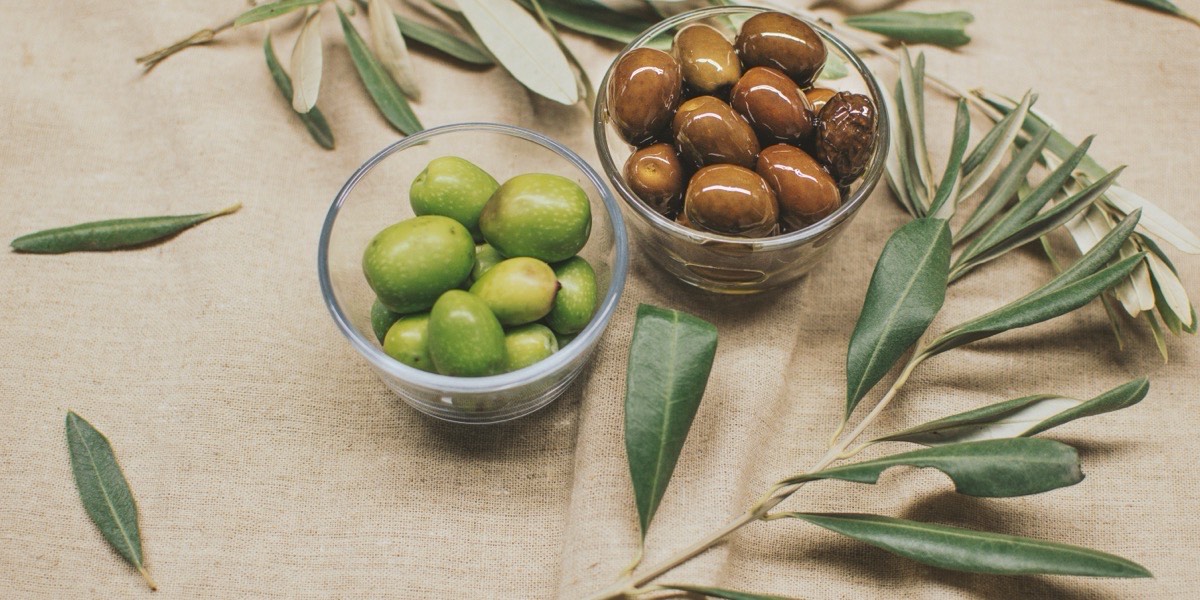
There is a moment in the year when Italian farms with olive groves change gear. Nets spread under the trees, crates leaving for the mill the same evening, a smell of cut grass coming into the kitchen with the first bottle. It lasts a few weeks, somewhere between October and December, and anyone staying on a farm in those days sees the working side of the place that stays hidden the rest of the year.
Here is when to go, what actually happens, and how to taste new olive oil without judging it by its colour.
What new olive oil is, and why it stings your throat
New oil, or novello, is simply the oil from the latest harvest, the one that reaches the table hours or days after milling. It is often unfiltered, so it looks cloudy and leaves a veil at the bottom of the bottle.
The taste is what surprises people. A freshly made extra virgin is bitter and peppery, sometimes enough to make you cough. That is not a flaw: bitterness and pepperiness come from polyphenols, the olive’s natural antioxidants, and they are the reason the oil resists going rancid. Over the following months they soften, and the oil rounds out.
The trade-off: unfiltered oil does not keep as long. The particles in suspension carry water and plant residue, which spoil it within a few months. If you buy a flask of cloudy oil at the mill, use it during the cold months rather than saving it for summer.
When olives are picked in Italy: a regional calendar
There is no fixed date. Growers watch the véraison, the point when the olive turns from green to purple, and it shifts every year with the season. The rough timing, though, is fairly stable and moves from north to south.
| Period | Where |
|---|---|
| Late September – October | The earliest picking: Lake Garda, Trentino, the Ligurian hills, and any farm aiming for a very green, bitter oil. |
| October | The heart of the season in Tuscany and Umbria, where olives are picked early for an intense fruity character. Marche, Lazio and Abruzzo start too. |
| November | Central Italy winding down, Campania and Basilicata in full swing, Puglia, Calabria and Sicily getting started. |
| Late November – December | The tail of the Italian season: southern Puglia, Calabria, Sicily and Sardinia, where some varieties are picked almost up to Christmas. |
If you only have one weekend and want the best odds of finding a mill running, aim for the last two weeks of October or the first week of November in central Italy.
Why many farms pick early
Picking as soon as véraison begins means less oil: the olive has not filled with fat yet, so the yield drops. In exchange you get a greener, more bitter oil, richer in polyphenols, which is exactly what quality-minded producers are after. Waiting for black olives gives more litres and a milder oil that ages faster. It is a choice, not a rule, and it is worth asking your hosts which one they make.
What happens inside an olive mill
From tree to bottle takes only a few hours. That is why a visit to a frantoio on the right day is worth the trip on its own.
- Arrival and washing — leaves and twigs are removed and the olives washed. Less than 24 hours should pass between picking and milling; the most careful farms stay under 12.
- Crushing — olives, stones included, are ground into a paste. The noise is the part children remember.
- Malaxation — the paste is stirred slowly so the oil droplets merge. Quality is won or lost here: more heat means more oil, but fewer aromas.
- Extraction — modern mills use a centrifuge to separate oil, water and pomace. Traditional ones still work with presses and mats.
- The first taste — the oil comes out warm and opaque, and the toasted bread is already waiting. This step is not in any manual, but it always happens.
What “cold extracted” actually means
You see it on a great many labels, and it is not a slogan: it means the olive paste never went above 27 °C during processing. Above that you gain yield and lose aromas and polyphenols. It is one of the few label phrases that says something concrete.
A day of picking on a farm
On farms that open the harvest to guests, the day is gentler than a grape harvest: you are not bent over, you stand with your arms up.
- Morning — nets go down under the trees and picking starts. By hand, with combs, or with electric shakers. The olives fall onto the nets, go into perforated crates and stay in the shade.
- Midday — lunch, often under the trees or on the porch. Soup, bruschetta, last year’s wine.
- Afternoon — loading up and heading to the mill. Many farms take guests along, and it is the most interesting hour of the day.
- Evening — tasting the oil that has just come out, usually against the previous vintage.
Bring closed shoes, light long sleeves, a hat and clothes you can ruin: olive oil never comes out of fabric. Late October mornings on the hills are cold even when the afternoon is mild, so dress in layers.
It works well with children
Better than a grape harvest, for two reasons: no wasps, and no hours in the sun. Two or three-hour sessions on low trees, with a net to fill and a trip to the mill, hold small children easily. If you are looking for a farm set up for this, browse the olive harvest experiences and the olive oil tastings that farms have declared.
Autumn events worth planning around
Three fixtures to build a weekend on, all of them about new oil.
- Frantoi Aperti in Umbria — Italy’s best-known event on the subject, now in its 29th edition. In 2026 it runs from 17 October to 15 November over five weekends, across working mills, hill towns and olive groves.
- Camminata tra gli Olivi — the national olive grove walk day run by the Città dell’Olio association, on the last Sunday of October. More than a hundred towns lay out walking routes of 2 to 7 kilometres through the groves, ending at a mill or a farm with bread and oil to taste.
- Olioliva, in Imperia — the Ligurian Riviera’s new oil festival, in the old centre of Oneglia, traditionally on the second weekend of November.
Detailed programmes usually come out between late September and early October, so book your stay first and check the exact dates with the organisers.
How to taste new olive oil
Professional tasters use a blue glass, and not for show: it stops the colour from influencing the judgement. At home or on a farm, a small glass and a little attention will do.
- Pour a spoonful of oil into the glass and cover it with one hand.
- Warm it for about twenty seconds in your other hand, then swirl it gently.
- Uncover and smell: look for cut grass, artichoke, green tomato, almond.
- Take a small sip and draw it between your teeth together with some air. This spreads it across your mouth and releases the aromas.
- Swallow and wait. Bitterness arrives on the tongue, pepperiness a few seconds later, at the back of the throat.
Fruity, bitter and peppery are the three virtues. Rancid, musty, muddy or vinegary notes are faults, and an extra virgin should not have them.
Colour tells you nothing
Deep green does not mean better and yellow does not mean worse: it depends on the variety and on when the olives were picked. That is exactly why tasters use a blue glass. A cloudy bottom is not a quality mark either, it just means unfiltered oil.
Storing it once you are home
Three enemies: light, heat and air. Dark glass or a tin, a cool cupboard away from the cooker, the cap closed properly. A filtered extra virgin kept that way holds up for about a year; cloudy oil straight from the mill should be used within a few months. New oil is not wine, and it does not improve with age.
Where to go: Italy’s olive oil regions
Olive trees grow almost everywhere in Italy, but some regions have more farms combining groves, hospitality and a mill, and are better set up for guests during the harvest.
- Tuscany — the highest concentration of farm stays with their own olive trees, from the Florentine hills to the Maremma. October picking, green and bitter oil, often with a mill on site or a few kilometres away.
- Umbria — the olive belt between Assisi and Spoleto is a recognised agricultural landscape, and autumn there revolves around the mills. It is also the region best organised for visitors during milling season.
- Puglia — Italy’s largest producer, with fortified farmhouses and centuries-old groves. Picking comes later here, between November and December, and the weather stays mild.
- Liguria — the taggiasca olive and a sweet, delicate oil, the opposite of the Tuscan style. A long harvest that in some areas runs into spring.
- Marche and Lazio — quieter hills, lower prices in the same weeks, and around Ascoli the home of the stuffed ascolana olive.
- Sicily and Sardinia — a late harvest running into December, warm days and local varieties you will not find elsewhere.
Five questions to ask before you book
Nobody can promise you the exact date. These questions cut the risk of arriving after the last olive has been picked.
- “When do you expect to pick?” In September the answer is vague; by mid-October it is precise. Book late if you can.
- “Can we come to the mill with you?” It is the best part, but not every farm takes guests along, and those milling at night sometimes cannot.
- “Is picking included in the stay?” Often yes for guests staying over. Where it is a paid experience, ask what it covers.
- “Do you have your own mill or use another one?” Neither is better, but it changes the day: the second means a drive.
- “What if the harvest slips?” Well-run farms have an alternative ready: pruning, a walk through the grove, a guided tasting of last year’s oil.
Frequently asked questions
When are olives harvested in Italy?
The olive harvest in Italy runs from late September to December. In the north and in Tuscany and Umbria it is concentrated in October, central Italy continues through November, while Puglia, Calabria, Sicily and Sardinia pick between November and December. The exact date changes every year and is decided by watching the olives change colour.
Why is new olive oil bitter and peppery?
Because it is rich in polyphenols, the olive’s natural antioxidants. Bitterness and pepperiness are considered virtues in an extra virgin olive oil, not faults, and they soften in the months after milling.
Can visitors join the olive harvest on an Italian farm?
Yes, many farms open the harvest to their guests during the autumn season. You usually take part for a few hours, with nets and combs provided by the farm, and follow the crop to the mill. It is a tourist experience, not paid work.
How much oil does one olive tree produce?
It depends on the variety, the age of the tree and the year. As a rough guide, a mature olive tree yields 15 to 40 kilos of olives, and 100 kilos of olives give an average of 12 to 15 litres of oil.
What is the difference between new oil and novello?
None: they are two names for the oil of the latest harvest, freshly milled. It is often unfiltered and looks cloudy, leaving a veil at the bottom of the bottle.
How long does extra virgin olive oil last?
A filtered extra virgin olive oil, kept away from light, heat and air, holds its qualities for about twelve months. Unfiltered oil bought at the mill should be used within a few months, because the particles in suspension speed up its deterioration.
In short
To see a mill at work, look at October in central Italy and November in the south, book as late as you can and confirm the date a few days before you travel. Bring closed shoes and a shirt you can ruin. Go home with a tin rather than a demijohn: new oil is meant to be used quickly.
Browse farm stays with olive groves and mills region by region on Agriturismi.it and contact the farm directly to find out when they start picking.